Manufacturing
What sets an experienced operator apart from a beginner is not written documentation. It is tacit know-how, the kind you cannot put down on paper.
The techniques that make your teams more productive.
- Setup and changeover on a production line
- Diagnosing a recurring fault and getting back up
- Quality checkpoints at the workstation
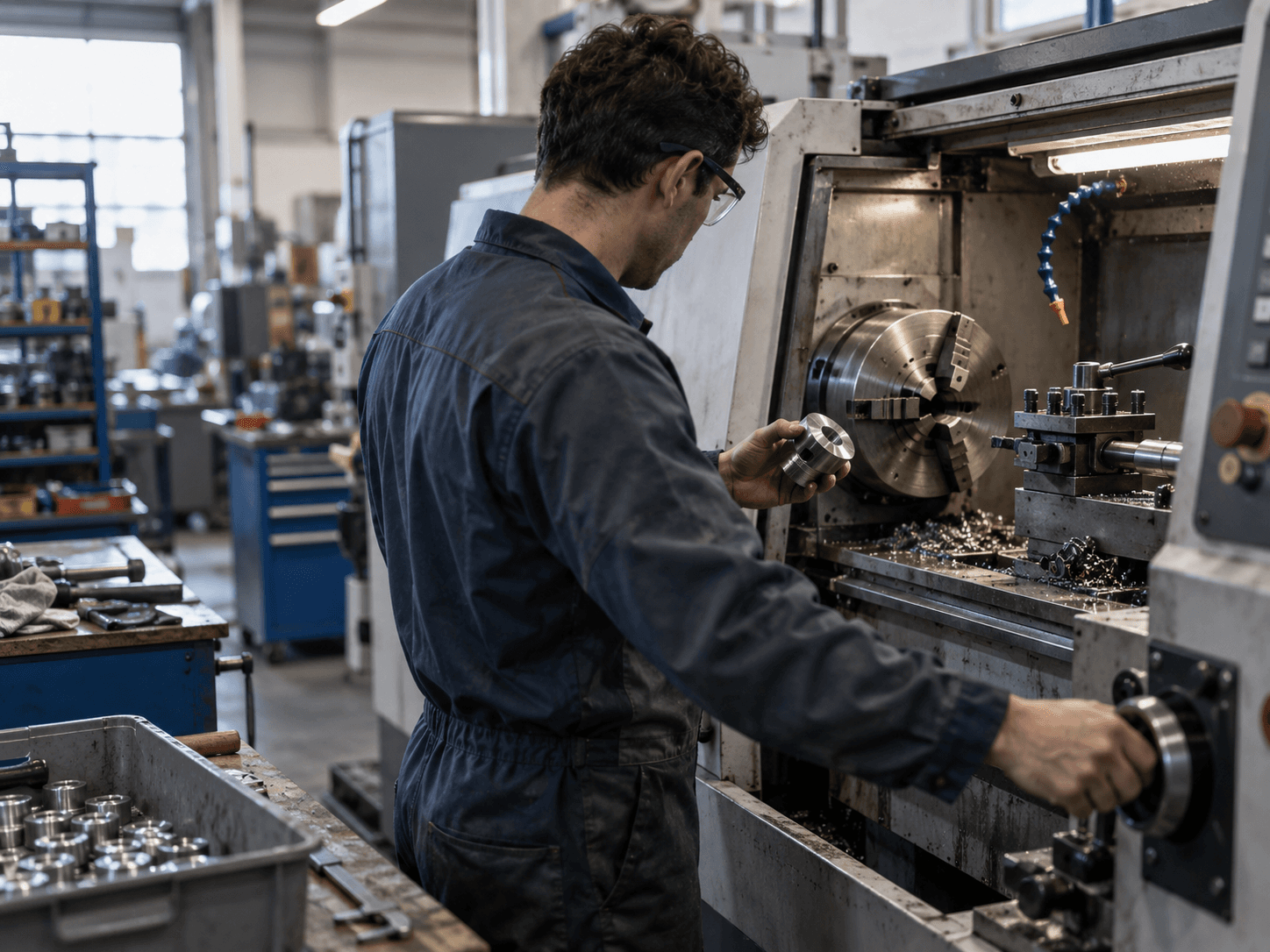
Industrial knowledge transfer: what video changes on the line.
Today
On a line, what sets an experienced operator apart from a beginner is often a set of techniques and habits that, added together, make for productivity and safety. When the expert leaves, those techniques are lost and productivity drops. Quality can suffer too.
The e-learning module
A path per line or per machine: the nominal setup, the drifts you actually run into, and the assessment that checks the operator knows what to look at before starting a run.
The documented procedure
The workstation sheet written from the recording, checkpoints in order, every step linking back to the second of video that shows it done right.
What losing that legacy already costs you.
A changeover that takes two hours with one operator and half a day with another, with nothing in the procedure to explain the gap
Scrap concentrated on the first parts after every shift rotation
Fault diagnosis that always comes back to the same two people, nights and weekends included
What triggers the need in this sector.
Getting ahead of a departure
A retirement can be seen coming. The six months before it are the right moment to capture what only that person knows how to do.
Aligning several sites
The same task, done three different ways across three sites. One reference recording becomes the version everybody follows.
Holding quality compliance
A written procedure proves it exists. A procedure that is filmed, dated and tracked to completion proves it is being followed.
The same problem, elsewhere.
- Logistics & TransportHigh turnover, safety procedures, scattered teamsSee the sector
- DigitalCRM, ERP, AI use cases and digitalisationSee the sector
- Healthcare & LaboratoriesStrict protocols, precise technique, regulatory updatesSee the sector
- ConstructionScattered sites, learning on the job, safetySee the sector
- Critical craftRare skills, luxury houses, couture workshopsSee the sector
What this sector asks us.
No. Recording happens at the workstation, during a real operation: a changeover, a setting, a restart. It is better that way — a technique re-enacted for the camera loses the hesitations and corrections, which are often the most instructive part.
A routing sheet says what to do and in what order. It says nothing about the pressure in the hand, the sound that means it is catching, or the visual cue that makes you stop. The recording keeps all three, and the procedure it produces links to the second of video that shows them.
Transcription works from the audio track: a microphone close to the operator — lapel or headset — makes all the difference in a noisy environment. The module and the procedure stay readable afterwards, since they are written and not only spoken.