Healthcare & Laboratories
The gesture has to be exact and the protocol traceable. And every regulatory update has to reach everyone, at once, with no stale version left in circulation.
The techniques that make your teams more productive.
- Preparing a station and aseptic technique
- A full analysis protocol, start to finish
- Handling and calibrating a piece of equipment
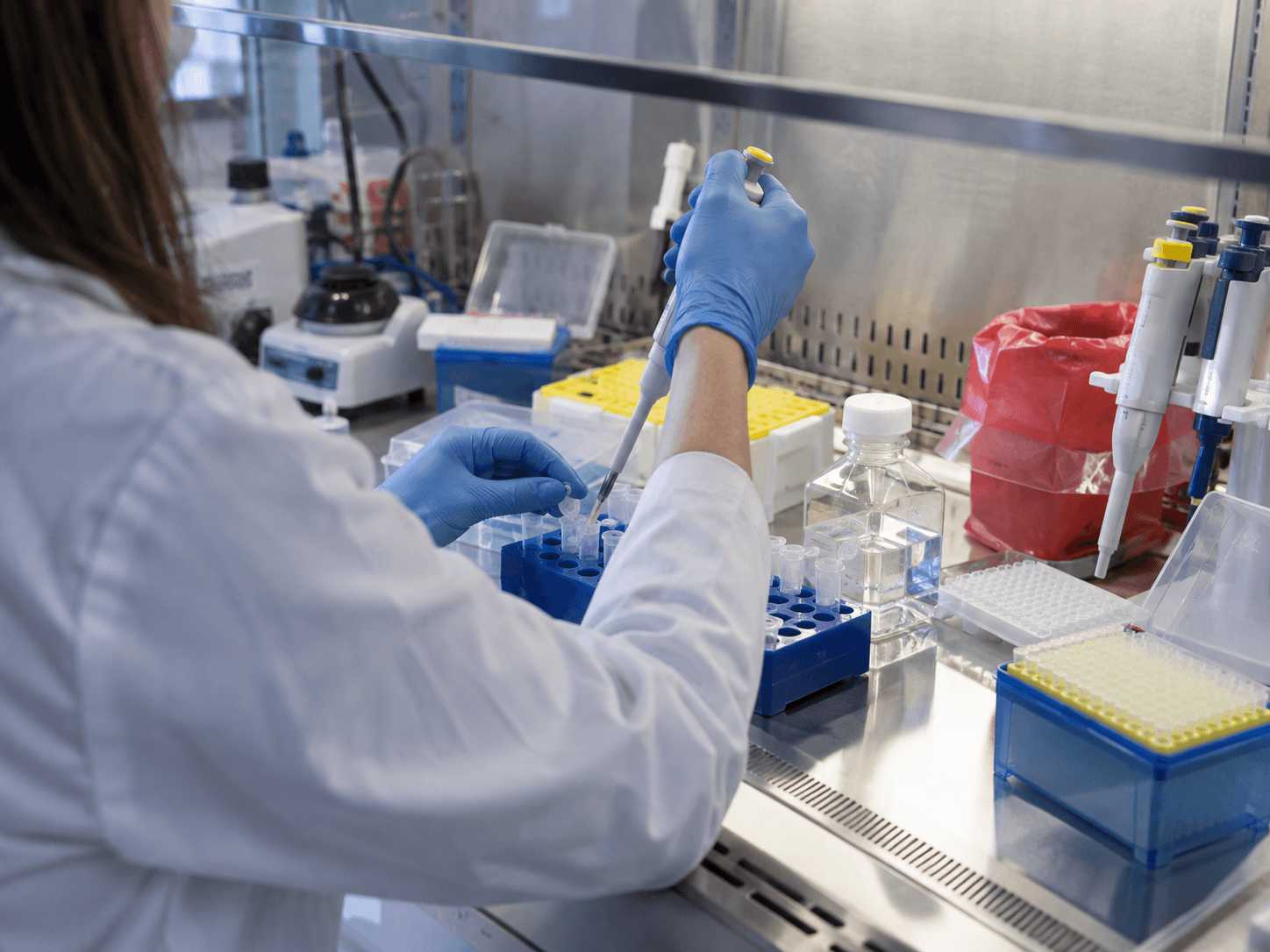
Laboratory SOP training: from exact technique to a written record.
Today
A written protocol gives the sequence and the thresholds. It does not give the technique: the angle of the sample, the way to hold the pipette, the sign that tells you to start over. That level is passed on in pairs, at the bench, and it is lost at exactly the rate people leave.
The e-learning module
A path per protocol, with the assessment and the completion attestation that show the technique was seen and understood.
The documented procedure
The protocol written step by step, dated, with a record of who consulted it and when.
What losing that legacy already costs you.
A regulatory update that forces retraining, with no record of what was demonstrated the time before
Variation between operators on the same protocol, visible only at quality control
Long shadowing time, taken from the people who are already in most demand
What triggers the need in this sector.
Holding quality compliance
A written procedure proves it exists. A procedure that is filmed, dated and tracked to completion proves it is being followed.
Rolling out a safety instruction
A rule that changes has to reach everyone at once, with a record of who saw it and when.
Getting ahead of a departure
A retirement can be seen coming. The six months before it are the right moment to capture what only that person knows how to do.
The same problem, elsewhere.
- ManufacturingTechnical know-how, machines, quality proceduresSee the sector
- Logistics & TransportHigh turnover, safety procedures, scattered teamsSee the sector
- DigitalCRM, ERP, AI use cases and digitalisationSee the sector
- ConstructionScattered sites, learning on the job, safetySee the sector
- Critical craftRare skills, luxury houses, couture workshopsSee the sector
What this sector asks us.
By re-recording the part that changes. The module and the procedure are both produced from the recording, so the update happens in one place, and the audit log keeps a trace of the previous version.
In the European Union, with AI processing in France. Your data is never used to train our models: that is a contractual commitment, not an intention. The detailed measures are on the security page.
Yes: four role levels, and isolation by organisation enforced on every table. Every access change is written to the audit log.